State of the Research I

State of my Research:
Since I started grad school this fall I’ve decided to use this blog to talk about where I’m at in my research. Right now my topic is street transgressions, a term I made up and defined as: any breech of civil inattention with eye contact, gesture or speech. Civil inattention is a fancy sociological term for the way we ignore strangers on the street, how we acknowledge them without fully engaging. Generally one looks at the other from about 8 ft away, without making eye contact, and then looks away, you may look again at closer range. I’m considering any deviation from this to be a street transgression
I initially started using the term street harassment, looking at gender and race based interactions but found the term troubling and problematic for a few reasons.
1) harassment is so negatively charged that it ignores positive experiences that people have with strangers in public
2) harassment is a crime, it criminalizes the ‘harasser,’ something I find counterproductive to my project
3) I want to be as inclusive as possible here; catcalling, stop & frisk policies, pamphleteers, people asking for money, I think all of this contributes to where certain people feel safe (or unsafe) in urban areas.

News:
This topic has been in the news lately, with Hollaback bringing attention to gendered harassment:

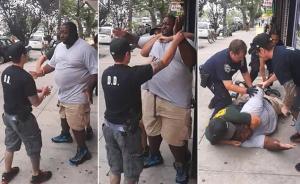
and Eric Garner bringing attention to race-based harassment:
garner

Initially I was worried, that I wouldn’t be taken seriously as an academic studying urban black problems (being an urban black woman myself). In light of current events I feel a responsibility to the black community to continue my research.
My experiment seeks to use GPS to track where and to whom these street transgressions occur. I’d like to chose a demographic sample and have them track street transgressions on their phones. I hope that this simple data will help us figure out what is going on and how we can make the world feel like a safer place for everyone.

Strong Black Women are Women Too

Ironically, I’m writing a post decrying ‘angry black women’ because I’m feeling bitter and black tonight. It’s been a tough couple weeks for American Blacks with both Mike Brown and Eric Garner joining the scores of black people killed at the hands of police. On a depressing episode of the Read the hosts tried to keep our spirits up with news of Black Excellence. To support beautiful black women, I went out to buy the new W Magazine with Iman on the cover, but it wasn’t out yet, instead I bought a copy of bitch magazine with an article on ‘the Myth of the Strong Black Woman.’ In it, Tamara Winfrey Harris describes the myth of the sassy no-nonsense ladies, “the cold, overeducated, work obsessed woman” who is “half as likely to marry as white women.”

I just finished reading Chimamanda Adichie’s ‘Americanah,’ which lived up to all the hype, as far as I’m concerned. I was excited to hear what my Slate friends had to say on the Audio Book Club (like all podcast listeners I have an imagined relationship with them) and was so disappointed to hear their criticisms. While I loved the book, I think there are many things you can criticize it for. I too felt like the romance was not the strongest part of the book. But The Audio Book Club argued that it wasn’t believable that such a strong female protagonist would do something so weak, selfish and cruel. Emily Bazelon, friend to the blacks was the strongest champion of this opinion. I am so disappointed that these critics, even after reading a book that exposes and challenges these stereotypes, could not get past the idea of the strong black woman. It was unebelievable to them that a woman could be strong in her sense of self, but be ‘weak’ or vulnerable. Haven’t they seen the new stereotype of a woman who has it together in her work life, but can’t get it together in her personal life (have they missed Mindy’s character on the Mindy Project)?

What will it take to convince people to stop thinking of black people as animals? We are strong women, we have to be to withstand the racism and sexism of this culture. Some American blacks come from a line of women who survived the middle passage, who survived the back-breaking work of slavery. That doesn’t mean we don’t feel pain the same as whites. We are independent and capable, but we aren’t invincible. Strength should not be the only positive attribute a black woman can own, we are sensitive and vulnerable too and this is not weakness, this is powerful, this is what it means to be human.

Updated 10/13/14:

In which other white people on slate have trouble understanding why black people idolize white people (hint: there are a lot more white people in the US to idolize than black ones):
http://www.slate.com/articles/podcasts/the_audio_book_club/2014/09/roxane_gay_s_bad_feminist_book_club_discussion_guide_and_podcast.html

from the Gawker Review of Books Interview of Charles Blow:

First comes the recognition that we are devaluing black and brown bodies. And that that is not even a new phenomenon, that that is an extension of an American phenomenon, in fact it is even a world phenomenon. There is a mountain of social science that ranges from doctors not prescribing pain medication to black kids at the same rate as they do for white kids with similar illnesses to spanking being more prevalent among black boys. When you think about that body, and the violence that it must endure—

Right, like the word Ta-Nehisi Coates’s constantly used in his reparations essay, “plunder.” It’s similar to what he was getting at. I keep thinking about how there is not only always something coming at us, but something being taken from us.

Right. And endurance becomes this ambient thing in your life; it becomes your constant. It is not just to play and grow up and fall in love, but it is to endure. It becomes the paramount motivation in your life. The tragedy when you hear young men say, Oh I never thought I’d be 18 or 21 without going to jail or being in the grave. I’ve heard this too much. If that is being drilled into your mind, what kind of psychological damage does that do to you, and to your relationship to society? And in addition to that, whatever damage is being done, society is amplifying the damage by misconstruing the data and concepts so that we overestimate black crime, we overestimate black hostility, we overestimate black aggression. We ascribe it everything dark and negative. In that kind of hostile milieu of black bodies that have been tortured in a way, in a system that is designed to destroy it, these concepts of black being dangerous and wrong, you can have the unfortunate crossing of those wires and you get shootings. I don’t know how to fix that. I don’t know if I’m equipped to answer that.

Maybe not “fix,” but you’re in a very powerful post at the Times. You have a platform every week to talk about whatever you want, or at least what’s topical in the news, do you—

Well, my job is to shine a light. Illuminating and educating as best I can is the tool that I have. Other people have different tools. And hopefully they can use what I do in their advocacy, in their boots-on-the-ground sort of work in neighborhoods, changing minds person to person. Other than that, I’m not sure how it changes.

Admission

“They’re angry at you, all the time. After a while, it just grinds you down…
The applicants are angry because I can’t see how special they are. Their parents are angry because I let in some other kid with a lower SAT score. The alumni are angry because they got into Princeton, but their brilliant kid got denied. The faculty’s angry because we took the athlete, not the genius, but the football players know that its easier to get in if you throw the discus, and all the violinists and pianists are pretty sure you have an edge if you play something strange, like a tuba or the harpsichord. All the New Yorkers believe that everyone out there from South Dakota gets in automatically, but out there in South Dakota they think they don’t stand a chance at a place like Princeton. The working-class kids are convinced we’re selling admission to the highest bidder. Simone is angry at us because we’re elitist, but the elite know for sure that we’re giving their places away to every black or Hispanic kid who applies. Nonlegacy kids are pissed of because they read somewhere that legacy kids are twice as likely to be admitted. But I’ve watched my boss get up in front of a packed house at reunions and tell all those loyal alumni that two-thirds of their kids are going to be rejected. Let me tell you, they’re not thrilled about that. When I go out to visit schools, the kids are mad at me because they know I’m going to dangle this beautiful thing in front of them and encourage them to apply, and then reject their applications. The college counselors, the private ones who charge thousands of dollars, they’re furious at us, because we’re furious at them, and if we even smell them on an application it pisses us off, which makes it hard for them to sell their services to the parents, who are already angry at us and are now going to be angry at them, too.”

“Can i just say, as a mother of a prospective applicant…that it’s very frustrating. We’re all trying to figure out what you want. And it feels like every time we figure out the rules, you just change them. One year it’s ‘well-rounded students.’ The next it’s minorities who play the flute,’ then as if remembering that it wasn’t supposed to be about her, she rephrased her conclusion. “these kids want to be able to give you what you want.’

And therein, thought Portia…resided the problem…

‘We’re very much aware of that,’she told them. ‘we understand the frustration. And I don’t think there’s anyone in my field right now who isn’t worried about what this is doing to the kids. And I don’t just mean the competition, though that’s bad enough. I mean what the process is doing to them psychologically…We’ve got twenty-five percent of all college applications in this country going to one percent of the schools. And that one percent includes the only fifteen American colleges who accept less than twenty percent of their applicants. We know there are parents who are doing everything they can to game the system. They’re having their kids diagnosed ADHD or learning disabled so they can get extra time on the SAT. Now that ETS has stopped denoting which students have been given extra time, there’s no reason not to. But the message. To the kids. They’ve been tutored in everything, for years, whether they need it or not. So what they come to understand is: I’m not good enough to do it on my own. I need help to be successful…

And how can that not carry forward into their adult lives? I think it already impacts their experience as college students. We have students who freak out when they no longer have that support. They’re e-mailing their tutors and sending them their papers for review. They feel fraudulent…

I had a pretty scary conversation last year with one of my friend Rachel’s babysitters. She’s a senior at Princeton now. She told me a lot of her friends have a kind of disassociation. They’ve spent years assembling this perfect self to display to use — to people who are going to make these important decisions about htem. But sometimes they don’t feel they’re that person at all. They don’t feel smart or capable in the least, and of course when they get to Princeton they’re surrounded by their peers, who have done just as good a job of assembling this competent veneer, then they feel as if they’re the only fake in the bunch. This girl, Samantha was telling me there’s so much self-doubt. When I heard that, I suddenly felt as if I’ve been doing these kids a disservice.
They expect a lot from themselves.
Oh my God. So much. I honestly wonder if they’re not creating, or at least abetting, this surge of anxiety and depression in college-aged kids. And then there’s the other side of the coin. Which the babysitter also pointed out to me. Which is that some of them get to college and they just let all those balls they’ve been juggling for years fall out of their hands. They’ve worked themselves into the ground to get in. They feel like they missed out on slacking off. So now that they’re in, they’re going to have that lazy teenager thing they never had in high school. Seriously the whole system. I wonder about it sometimes. But this where we are. In a few years, it will probably look different.”

Admission, Jean Hanff Korelitz

Late post with some quotes from Admission (pulpy novel the Tina Fey movie is based on) which I read earlier this summer while studying for the GREs. Illuminating a little of the complex many in my generation share. How did I get here? Why did I get here as opposed to someone else? How do I make the best of it? Not hugely different from other generations post-adolescent quandaries except in the magnitude of inequality.

Also:
To the White Girls Who Didn’t Get Into the College of their Dreams
It’s different for grad school but my 2 cents is that I want to be somewhere that wants to have me, not someplace where I’m the last person they pick off the wait-list.
Works in Progress II: Prison stats

When I found out that a friend of mine was imprisoned at San Quentin I was reading Dreaming in French. The book talks about Angela Davis’ experience with the Soledad Brothers at San Quentin. When I saw that she would be speaking in my area I bought some books for her to sign. ‘Are Prisons Obsolete‘ was short enough for me to finish in the week leading up to her talk. It reminded me of this clip from black power mixtape:

The introduction to the book was full of mind-boggling statistics. For my job I had been using the d3 library to make data visualizations, so this seemed like a great opportunity to make a compelling infographic about these statistics. I haven’t done so yet, but here are some of the stats I want to use:

-Only 5% of world population lives in the US, but it holds 20% of prison population
-There are 2x as mental mentally in in prisons/jails than in all psychiatric hospitals combined
In 1990 1/4 black men between the ages of 20 and 29 have been incarcerated…
by 1995 it was 32.2%
-Many minorities are more likely to be in prison than educated

Fastest growing portion of the prison population is black women
Up 78% in 5 years
-There are more women in prison now than in the entire decade of the 70s

California Statistics

in 2002:
there are 157,979 people incarcerated
20,000 for immigration detention
35.2% Latino
30% black
29% white

I’d like to make a CA prison timeline, showing their proliferation during the Reagan Era and how they continue to be built at alarming rates:
1852 San Quentin
1880 Folsom
1952-55 9 prisons built
1962-65 3 jails
1980s (Reagan Era) 9 prisons
90s 12 new prisons
Takes 100 years for 1st 9 prisons, last 9 in 10 yrs
Now 33 prisons, 38 camps, 16 correctional facilities and 15 prisoner mother facilities

Queens of Black Bohemia

Some of my favorite podcasts are the Culture Gabfests with music critic Jody Rosen. I’ll never forget his comments from a podcast 3 years ago that there’s a hunger in black bohemia for heroes. I am always on the lookout for the new heroes of black Bohemia. Here are is a playlist of black bohemian queens to tide us over for the next big thing, in roughly chronological order:

Nina Simone


Phoebe Snow:

Zap Mama:

Lauryn Hill:

Les Nubians:

The Noisettes:


Santogold:

Janelle Monae:


Left off Eryka Badu, Sade, Jill Scott, Grace Jones and others. But interested to hear what others think.

9/4/2013 Added Laura Mvula:

Thanks to Slate Culture Gabfest.

Things that made me cry

This is a list of things that have made me cry in the last month or so:

I had originally thought to put the list in order of what should have made me cry but I don’t think such an order exists. I am trying to be kinder to myself about being a highly sensitive person. Recognizing that I am part of a larger group (20% of individuals) who share this genetic trait and that there isn’t anything wrong with it.

This feels related to this post from around this time last year.

Grace

Growing up we used to say grace before every dinner. I’m not sure when or why, but we stopped. Maybe it was after my mom broke up with her boyfriend or after my brother went off to boarding school, probably some point in between. We used to have cards with graces from different traditions. We had blessings we chanted in Hindi, humorous English ones, short ones, long ones. Even at music camp we always sang a blessing before lunch and dinner, a popular favorite being ‘My Plow (Brings me Happiness)’.
Last year when I was in Afghanistan our host seemed surprised that someone as polite and well-mannered as myself hadn’t the patience to say grace before eating. I was out of practice, I’d like to get back into it. It’s a moment of meditation in our busy day. A moment to acknowledge the privilege that, unlike most people in the world, I don’t have to worry about where this meal will come from. Grace is Good.

‘Privilege is a headache you don’t know you don’t have,’

-Ani Difranco

Thanks to Dom for reminding me @6:40:
http://vimeo.com/46696697

Aesthetics and the Mark of Cain

I once took a class where we studied monsters and early geography. Our teacher argued that the reason Americas Most Wanted publishes pictures of criminals is that we like looking at faces for signs – we want to know that we can recognize a criminal just by looking. This curiosity is as old as the bible, wherein God marks the first murderer for all to see. We look for outward signs of inner demons, particularly on the face.

The irony here is not just that we can’t judge character based on facial features, but that if I we were to do so, the only thing I know for certain is that the most beautiful people can get away with murder (though not literally). It’s the beautiful people who don’t have to do as much, they don’t have to be smart or clever to be treated well. I hold beautiful people to a higher standard because they can coast because most people see no blemishes in the outside and assume there are none in he inside.

Which brings me to why I have trouble with looks-based compliments. When someone says you’re hot they’re saying you’re worthy of attention. They may or may not believe that because I have a cute face, I’m good on the inside. I’m not saying I’m not worthy of attention or that I’m not good on the inside, but the stranger giving me the compliment doesn’t know (and if I really am as good looking as you say, I probably don’t need to be good on the inside). Unlike Mindy Kaling, who argues in her recent book that a man should compliment how you wear the item (your body) rather than the item you’re wearing, a man after my heart would compliment my fashion sense. I can’t really help what my face looks like, but I can chose the glasses I put on in. For me, that seems to get a little bit at what’s between the ears.